
Children rarely stop mid-play to tell you they’re thirsty. By the time a child says “I’m thirsty,” they’ve often moved past mild dehydration into moderate territory, according to New York-Presbyterian’s pediatric health team. That gap between reality and a child’s self-awareness makes it a parent’s job to watch for the physical signs before things escalate.
Recognizing the warning signs of dehydration in kids early can make the difference between a glass of water at home and a trip to the emergency room. This post covers why children are more vulnerable to dehydration, what the signs look like at each stage of severity, and exactly what to do when you spot them.

Warning Signs of Dehydration in Kids, Organized by Severity
Mild Dehydration: The First Signs to Catch
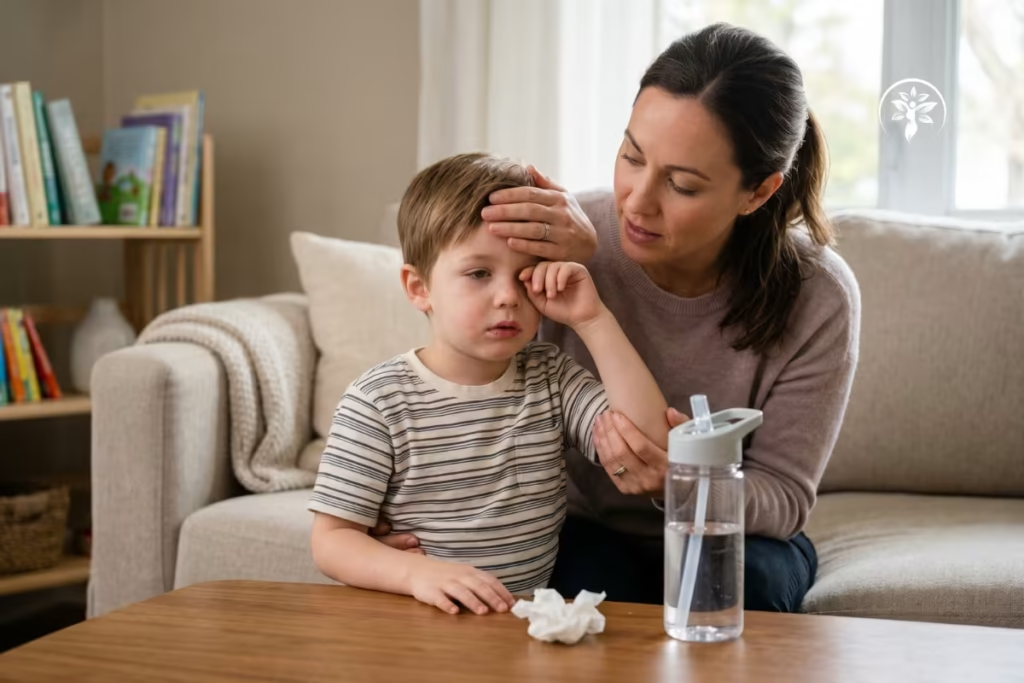
Mild dehydration produces subtle physical changes. Lurie Children’s Hospital identifies the early signs as a dry or sticky mouth, fewer tears when crying, urine that is darker yellow than usual, and urinating less frequently than normal. A child may also seem more tired or irritable without an obvious reason.
For babies still in diapers, the key number is wet diapers. The New York-Presbyterian pediatric team notes that six to eight wet diapers per day is the normal range for infants. Fewer than three or four in a day is a warning sign. For older, potty-trained children, urinating every two to three hours is typical. If that stops, take notice.
At this stage, encouraging fluids at home is usually enough. The situation is manageable, but it needs attention now rather than later.
Moderate Dehydration: Signs That Need Prompt Attention

As dehydration progresses, the signs become more visible. According to StatPearls via the NIH, moderate dehydration produces dry oral mucosa, reduced skin turgor (when you gently pinch the skin, it returns to normal slowly), a rapid heart rate, and increased irritability. Sunken eyes are another sign that appears as fluid loss increases.
In infants, check the fontanelle. This is the soft spot on the top of a baby’s head. If it looks pressed inward or sunken rather than flat, that indicates more significant dehydration and warrants a call to your pediatrician. Crying without producing any tears is also a clear signal at this stage.
The AAP’s clinical guidance classifies moderate dehydration in children as a fluid deficit requiring medical assessment. Home fluids may help, but if your child is not improving within a reasonable period, contact your doctor.
For tips on keeping kids healthy during illness and recovery, see our Grow Wellness Life guide to kids’ wellness.
Severe Dehydration: Go to the Emergency Room

Severe dehydration is a medical emergency. Lurie Children’s Hospital advises calling 911 if a child shows signs of severe dehydration, as it can lead to seizures, brain damage, or in the most serious cases, death.
The warning signs at this level include extreme lethargy or difficulty staying awake, confusion or an altered mental state, a rapid heart rate while at rest, very fast breathing without physical activity, and deeply sunken eyes. No urination for an extended period is another serious indicator. Skin may appear mottled or have a bluish tint in the most severe presentations. Per the NIH’s clinical data, these signs indicate that blood volume has dropped significantly and the body is struggling to maintain normal organ function.
Do not wait to see if it improves. These signs require immediate emergency care and typically involve intravenous (IV) fluid replacement.
How Do You Know If Your Child Is Dehydrated? Your Questions Answered
What Does Dehydration Look Like in a Baby vs. a Toddler vs. an Older Child?
The physical signs shift across age groups. In babies, the clearest indicators are a reduced number of wet diapers, a sunken fontanelle, absence of tears when crying, and dry lips or mouth. Babies cannot tell you something is wrong, so these physical checks matter.
Toddlers show many of the same signs. Reduced urination, dry mouth, and unusual fussiness or fatigue are the ones to watch first. A toddler who is normally active but suddenly uninterested in play may be showing early signs of dehydration rather than just a bad mood.
In older children and teenagers, darker urine is one of the first and most reliable indicators. Headaches, dizziness, and fatigue alongside reduced urination are common. Teenagers engaged in sports or heavy physical activity carry a higher risk, particularly in hot weather. The AAP notes that the right daily fluid amount depends on size, activity level, and temperature conditions.
Can a Child Be Dehydrated Even If They Are Still Drinking Fluids?
Yes. If a child is losing fluids faster than they are taking them in, net dehydration occurs even with some fluid intake. This is common during vomiting and diarrhea, where fluid loss through illness outpaces what the child can drink. It also happens in extreme heat when sweat losses are high.
Plain water alone may not be enough in these situations. Nemours KidsHealth recommends oral rehydration solution (ORS) for mild to moderate dehydration, as it contains specific amounts of water, sugar, and salt to replace electrolytes lost alongside fluids. ORS is available at most pharmacies.
What Is the Urine Color Test, and How Does It Work?
Urine color is one of the most practical tools parents have for assessing hydration at home. Normal, well-hydrated urine ranges from clear to a pale straw color. Dark yellow urine, the color closer to apple juice, signals that the body is conserving water and that fluid intake needs to increase. If urine turns very dark or has a strong smell, that warrants prompt attention.
Johns Hopkins Medicine suggests teaching older children to check their own urine color as a self-monitoring habit, particularly during hot weather or sports. Many children find it a practical and memorable lesson.
For a broader look at healthy drinks and nutrition for kids, visit our Kids Wellness section on Grow Wellness Life.
What to Do When You Spot the Warning Signs
Home Treatment for Mild Dehydration
For mild dehydration in children over one year old, the first step is offering extra fluids. Small, frequent sips work better than large amounts at once, especially if the child has been vomiting. For children who can tolerate it, ORS is the most effective option because it replaces electrolytes alongside water.
The American Academy of Family Physicians (AAFP) confirms that oral rehydration therapy is as effective as intravenous fluid for mild to moderate dehydration caused by diarrhea, provided the child can keep fluids down. For infants under one year, continue breast milk or formula and contact your pediatrician for guidance on whether ORS should be added.
Avoid giving large amounts of plain water to babies under six months. Avoid sugary drinks, juice, or sodas as rehydration fluids, as these can worsen fluid loss through the gut.
When to Call Your Pediatrician
Call your pediatrician if your child has had diarrhea for more than 24 hours, has been vomiting repeatedly and cannot keep fluids down, or is showing signs of moderate dehydration such as a very dry mouth, sunken eyes, no tears when crying, or a sunken fontanelle in an infant.
Also call if your child seems to be getting worse despite fluid intake at home, or if they have not urinated for several hours. A fever above 102°F combined with signs of dehydration also requires a call.
For more guidance on managing fever and common childhood illnesses, check our related posts on Grow Wellness Life’s parenting and kids’ health section.
When to Go to the Emergency Room
Go directly to the emergency room, or call 911, if your child shows any signs of severe dehydration. These include extreme sleepiness or difficulty waking, confusion, very rapid breathing, no urination over an extended period, or skin that appears mottled or bluish.
A temperature above 102°F combined with dehydration also warrants ER evaluation, as the New York-Presbyterian pediatric team notes this can indicate heat stroke risk alongside severe fluid loss. Severe dehydration is treated with IV fluids and requires medical supervision.
Why Kids Get Dehydrated More Easily Than Adults?
Smaller Bodies, Faster Fluid Loss
Children have a higher percentage of body water than adults, and their metabolic rates are faster. This means they lose fluids more quickly and have less reserve to draw on. A toddler’s body has far less margin than an adult’s before dehydration starts to affect how they feel and function. Younger children are also less able to recognize thirst and less likely to act on it, which means they depend entirely on caregivers to catch the problem early.
Common Triggers to Watch For
The most frequent cause of dehydration in children is vomiting and diarrhea from a stomach illness. Fever also accelerates fluid loss through sweating and faster breathing. Heat and physical activity both increase how quickly children sweat, and some kids simply refuse to drink enough when they’re absorbed in play or when a sore throat makes swallowing uncomfortable.
Babies face a separate risk. If a newborn or young infant has difficulty feeding, fluid intake can drop significantly without an obvious external trigger. For infants, feeding problems alone can lead to dehydration. The American Academy of Pediatrics (AAP) recommends that parents contact a pediatrician immediately if they are concerned their infant is not getting enough to drink.
Keep Watching, Keep Acting Early
The warning signs of dehydration in kids follow a clear progression from mild to severe. Catching it at the dry mouth and reduced urination stage means you can manage it at home. Waiting until sunken eyes, tearless crying, or unusual lethargy appear means the situation has moved into territory that needs medical input.
Know your child’s normal. Check urine color during illness and hot weather. Offer fluids consistently rather than waiting for them to ask. When something looks off, act on it early. For more on keeping your children healthy through every season, explore our Kids Wellness and Parenting resources on Grow Wellness Life.