
It’s a familiar feeling for many parents: your child finishes one round of antibiotics, feels better for a week, and then comes home from school sniffling again.
You start to wonder: Is this just a normal childhood illness, or is something else going on? Understanding the signs of low immunity in children can help you tell the difference and take the right steps at the right time.
This guide covers what low immunity actually means, the key signs to observe, and how you can support your child’s immune health, starting today.
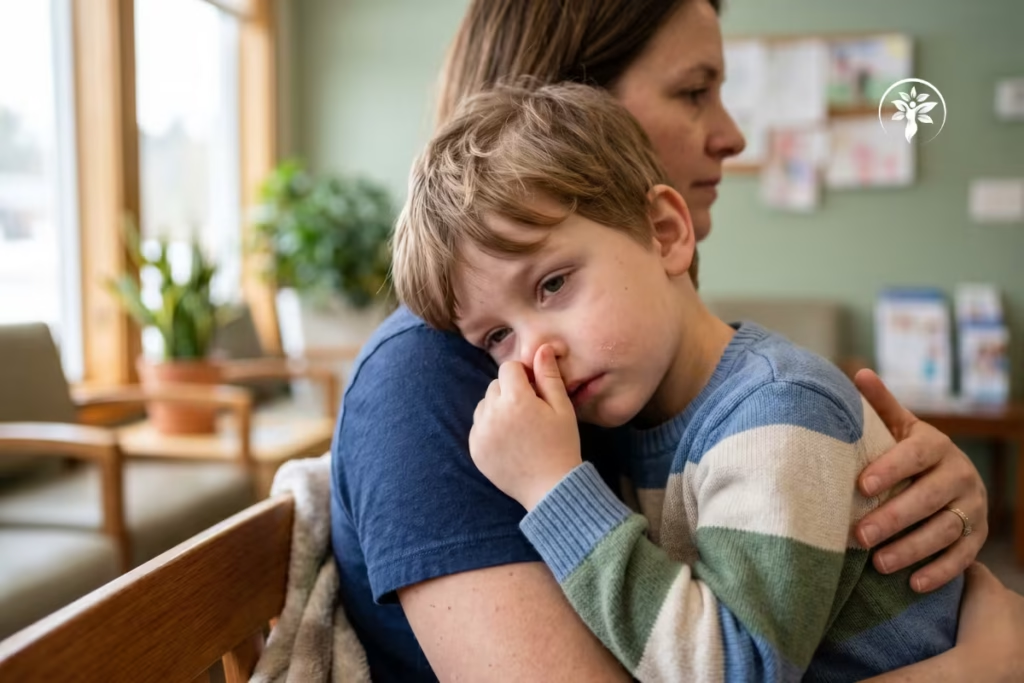
Common Signs of Low Immunity in Children
While frequent illness on its own is rarely a red flag, certain patterns can indicate that a child’s immune system is not functioning as it should. Here are the key signs to observe.
Frequent Infections That Are Hard to Shake
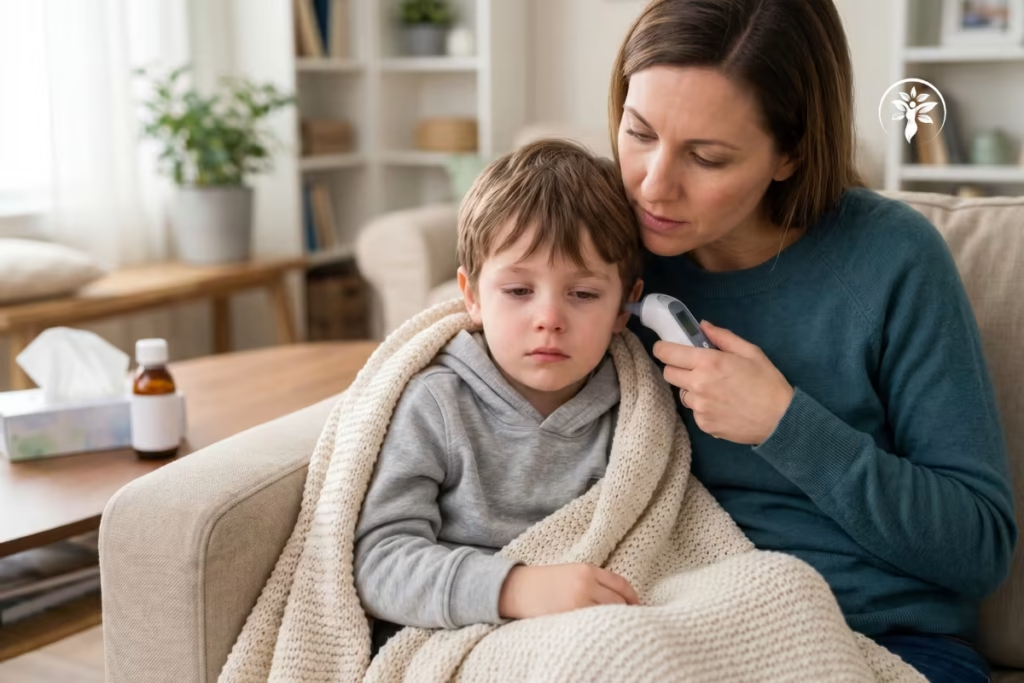
One of the most recognized signs of low immunity is when infections recur, last longer than expected, or require repeated or prolonged medical treatment. The Mayo Clinic describes this as infections that are more frequent, longer-lasting, or harder to treat than those seen in children with a healthy immune system.
This includes repeated ear infections, sinus infections, pneumonia, or bronchitis, particularly when they require hospitalization, IV antibiotics, or when they return shortly after treatment ends. It is also worth noting if your child develops infections in unusual places, such as the liver or spleen, or with organisms that would not typically cause illness in a healthy child.
A helpful distinction: a child who gets many colds that resolve within a week or two is less concerning than a child who gets fewer but more severe infections that require medical intervention each time.
Slow Wound Healing

The immune system plays a direct role in tissue repair. When a child gets a cut or scrape, the body sends immune cells to the site to fight off bacteria and begin the healing process.
Healthline notes that children with primary immunodeficiency disorders may experience poor growth or slow wound healing as part of a broader pattern of immune dysfunction.
If you notice that minor injuries on your child take significantly longer to heal, become repeatedly infected, or show poor recovery, this is worth discussing with a pediatrician. On its own, slow healing is not a diagnosis, but as part of a broader pattern, it can be a meaningful indicator.
Persistent Digestive Issues

The gut and the immune system are closely connected. A significant portion of the body’s immune activity is centered in the digestive tract, and when immunity is compromised, the digestive system is often affected as well.
Ongoing constipation, diarrhea, bloating, or stomach discomfort that does not resolve on its own may be a sign that something is off. Research published via the NIH has identified digestive and gastrointestinal problems as non-infectious signs that can accompany immune dysfunction in children, alongside more commonly recognized symptoms.
In such cases, these digestive issues are not the result of diet alone; they may reflect the immune system’s inability to maintain a healthy balance in the gut.
Unusual Fatigue and Low Energy
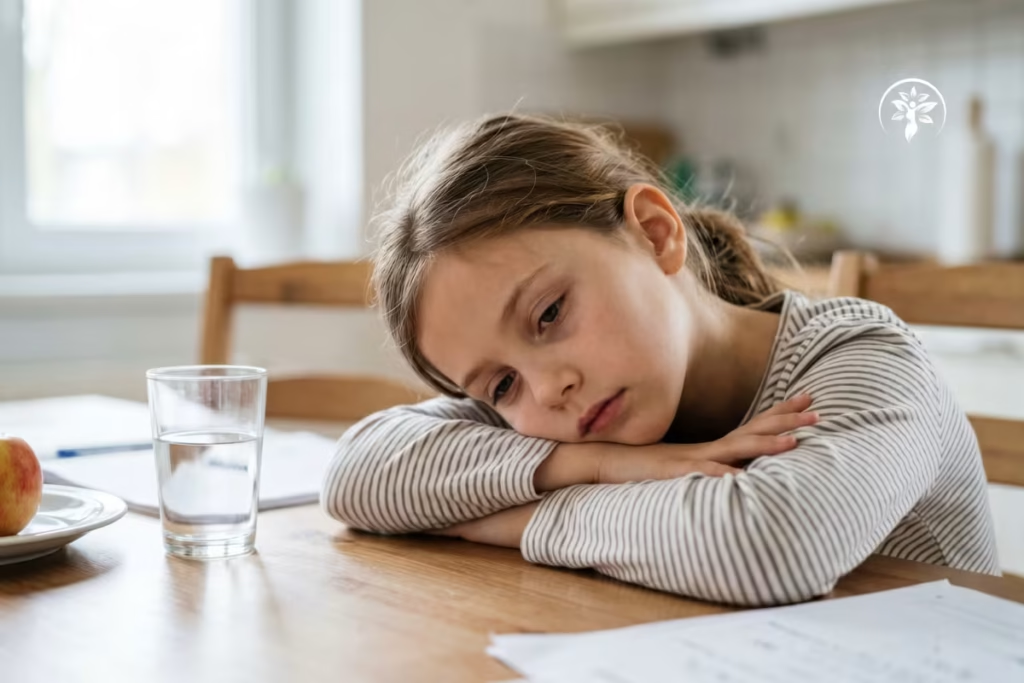
It is normal for children to feel tired after an illness. But when fatigue is persistent, when a child consistently appears low in energy, lacks interest in play, or struggles to keep up with daily activity even when not actively sick, it can signal that the immune system is working harder than it should.
A child’s immune system naturally uses energy when it is fighting infection. If the body is in a constant state of low-level immune activation, it can result in ongoing tiredness that parents often describe as the child “never fully bouncing back.” While fatigue has many possible causes, it is worth raising with a doctor if it is persistent and not clearly linked to a specific illness or sleep issue.
Poor Growth or Failure to Gain Weight

A child who is frequently unwell and whose immune system is consistently under strain may not grow at the expected rate. Pediatric immunology specialists at Children’s Health Dallas observe that children with primary immunodeficiency disorders often show symptoms in infancy and that these can range from mild to severe, sometimes affecting development.
If your child is getting sick so often that it is interfering with eating, activity, or overall development, or if your child does not appear well and energetic between infections, that is a more significant indicator of potential immune issues than illness frequency alone.
What Does “Low Immunity” in Children Actually Mean?
The immune system in children is not the same as in adults. It is still developing, which means children are naturally more susceptible to illness than grown-ups. Understanding this baseline is important before drawing conclusions about your child’s immune health.
The Difference Between a Developing Immune System and a Weak One
Children are born with some immunity passed from their mothers, but this protection fades over time. From around six months of age, their bodies begin building their own defenses, and that process takes years.
As a result, getting sick frequently during childhood is not automatically a sign of an immune deficiency. In many cases, it is simply the immune system learning.
The concern arises when a child’s body cannot recover from illness the way it should, when infections become unusually severe, or when the same types of infections keep returning despite treatment.
How Often Is Too Often? What Pediatricians Say About Illness Frequency
Many parents are surprised to learn just how often childhood illness is considered normal. According to pediatric specialists at the Mayo Clinic, most babies, toddlers, and preschoolers can have as many as 12 colds a year and still have a completely normal immune system. The average is around seven to eight infections per year.
Pediatricians at CHOC Health note that school-age children typically have five to six illnesses per year, while teenagers move closer to an adult pattern of two to three colds annually.
Therefore, the total number of colds is not the most useful measure. What matters more is how your child handles those illnesses, how long they last, how severe they become, and whether your child grows and thrives between episodes.
When Should You See a Doctor About Your Child’s Immune Health?
Most of the time, a child who gets sick frequently is simply building their immune system through normal childhood exposure. However, there are specific patterns that warrant a conversation with your child’s pediatrician.
Red Flags That Go Beyond Normal Illness
Mayo Clinic’s pediatric specialists highlight several patterns that raise concern about underlying immune problems: a child who ends up in the hospital every time they are sick, who frequently needs IV antibiotics to recover, who develops infections in less common locations, or who contracts infections caused by unusual organisms. Getting sick more than 12 times per year is also noted as a threshold worth evaluating.
CHOC Health’s pediatric team adds that if a child is losing weight, not physically growing at a normal rate, or is consistently unwell between infections, those are signs that something more significant may be happening.
By contrast, a child who has frequent mild colds but continues to grow well and remains energetic between episodes is generally not cause for major concern.
What to Expect at a Pediatric Visit?
If you are concerned about your child’s immune health, the first step is to schedule a visit with your child’s pediatrician. They will review your child’s medical history, observe growth and development patterns, and may order blood tests to assess immune cell counts, antibody levels, and other relevant markers.
In some cases, your pediatrician may refer you to a pediatric immunologist, a specialist in immune system disorders in children. Early evaluation is important because many immune conditions, when identified, can be effectively managed with the right treatment plan. You do not need to wait until the pattern becomes severe to ask for an assessment.
How Can You Support Your Child’s Immune System at Home?
While you cannot force the immune system to perform better, you can create the conditions that allow it to function at its best. Several practical, evidence-supported habits make a significant difference over time.
Sleep and Its Direct Impact on Immune Function
Sleep is one of the most important factors in immune health. Research highlighted by CHKD explains that during sleep, the body produces proteins called cytokines that help fight infection and inflammation. Without sufficient sleep, this production is reduced, leaving the immune system less prepared to respond.
Most school-age children need nine to twelve hours of sleep per night. Establishing a consistent bedtime routine, reducing screen time in the hour before bed, and keeping the sleep environment calm and comfortable are practical steps that support better rest. Toddlers need even more, around eleven to fourteen hours over a twenty-four-hour period, including naps.
Nutrition, Physical Activity, and Hygiene Habits
A varied, nutrient-rich diet gives the immune system the materials it needs to function well. Pediatricians at Lurie Children’s Hospital are clear that no supplement can cause the body to produce more immune cells, but nutrition through whole foods can meaningfully support the immune response.
Fruits and vegetables rich in vitamins A, C, and E, lean proteins that support antibody production, and probiotic foods like yogurt that maintain gut health are all valuable additions to a child’s daily diet.
Physical activity also plays an important role. Regular movement improves circulation, reduces stress, and supports the overall health on which the immune system depends.
Aim for at least sixty minutes of active play or physical activity each day. Finally, consistent handwashing, with soap and water for at least twenty seconds, remains one of the most effective ways to reduce the spread of infection and lower the burden on a child’s immune system throughout the year.
Staying current on recommended vaccinations is also an important part of immune support. The American Academy of Pediatrics recommends following the childhood immunization schedule, which is designed around how children’s immune systems develop and when they are most vulnerable. Your child’s pediatrician can guide you on what is recommended based on your child’s age and health history.
Final Thoughts
Watching your child get sick repeatedly is difficult, and it is natural to want answers. The important thing to keep in mind is that most childhood illnesses are a normal part of immune development, not a sign that something is wrong. The signs of low immunity in children are less about how often your child gets sick and more about how their body handles illness when it arrives.
If you notice a pattern of severe or recurring infections, slow wound healing, persistent fatigue, digestive trouble, or poor growth, those are signs worth discussing with a pediatrician. Trust your instincts as a parent. If something feels different about how your child recovers, or doesn’t, it is always appropriate to ask for guidance.
This article is for informational purposes only and is not a substitute for professional medical advice. Always consult your child’s pediatrician with specific health concerns.